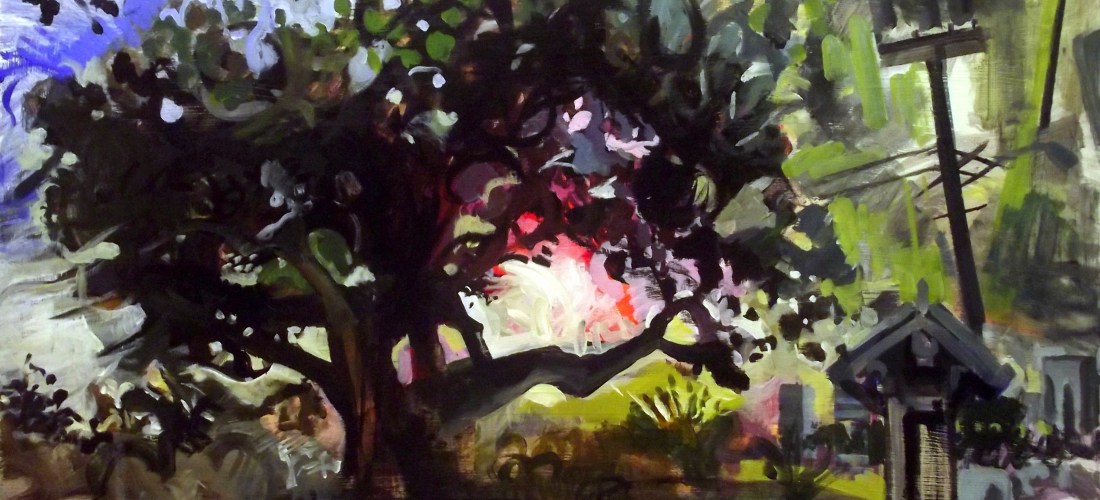
Check out the newsletter and The Retrieval of the Beautiful catalogue!
“Exhibition Dates: June 21 – July 16, 2016
Deadline for Submission: May 6, 2016
Notification Date: May 20, 2016
Artwork Shipping Dates: June 14 – June 18, 2016
Opening Reception: Thursday, June 23, from 6 – 8 pm”
from http://thepaintingcenter.org/juried-exhibition-retrieval-beautiful
“The Retrieval of the Beautiful
Galen Johnson’s book The Retrieval of the Beautiful (Northwestern University Press)
is a dynamic discussion of existence and consciousness of human activity, including
art. Johnson writes, “Here it is enough to see that beauty and the sublime blend into
one another when the beautiful grows powerful, transcendent and majestic.” Something
beautiful seduces you and draws you in.
Galen A. Johnson is an honors professor at the University of Rhode Island, director of
the Rhode Island Center for the Humanities, and General Secretary of the International
Merleau Ponty Circle. We are grateful to Galen Johnson and Northwestern University
Press for the use of the title The Retrieval of the Beautiful, the title of their recent
publication. Maurice Merleau Ponty trained as a psychologist, one of the youngest to
lecture at the Sorbonne and was an editor at Les Temps Modernes with Jean Paul
Sartre.
Merleau’s philosophical writing emerges from a deeply engaged humanist personality and
a passionately motivated form of observation. Merleau’s contribution to Phenomenology
is, for us, partly located in his description and analysis of what we might categorize as,
“formal” painterly issues – complementary color relations, parallax vision, afterimages,
geometry of optics.
His seminal essay, “Cezanne’s Doubt”, links these formalist elements to Cezanne’s
psychology and the artist’s fierce insistence on perception as a lived, physical
phenomenon. The essay was part of his articulation of the idea of the body-subject as
an alternative to the Cartesian ‘Cogito’. The notion of “embodiment” is a central tenet
of his ontology.
The development of art since the 1970’s has been, in many ways, Phenomenological.
It has taken many of the connections between body and expression, temperament
and politics and finally body-art-history and made it its own. Through the framework
of Merleau’s aesthetics Galen Johnson pursues the connections found in desire and
repetition, difference and rhythm as they evoke the sublime. Johnson’s finely textured
discussion weaves classical philosophy as well as the moderns, including Deleuze
and Lyotard, as they shuttle threads in
The Retrieval of the Beautiful.”
Bill Hochhausen, 2016 from the catalogue


 @nbfeartist